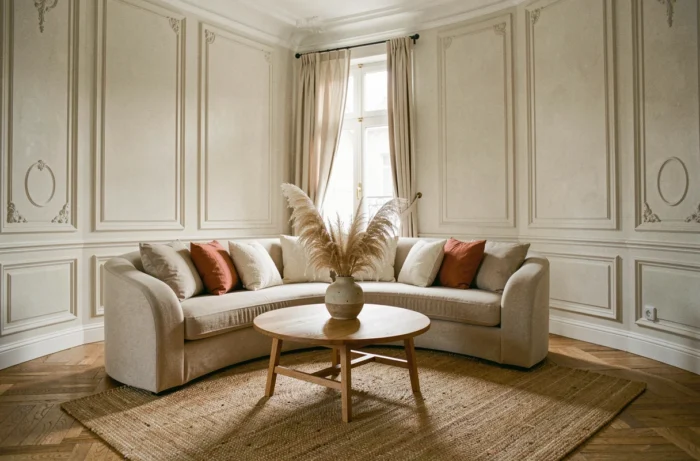
Timeless interior design is based on a small number of principles: raw materials, understated palettes and clean lines. Nearly every online decorating guide draws on these aesthetic codes. One aspect gets less attention: where furniture comes from, what it is made of and whether it can be repaired rather than replaced.
In France, the extended producer responsibility (EPR) scheme now covers furniture and certain home textiles, with dedicated reuse funds supporting social and solidarity economy organisations. This framework is changing how we can create a sustainable home.
Second-hand furniture and indoor air quality: what aesthetics don’t tell you
Choosing a vintage oak sideboard or a restored club chair seems consistent with a sustainable approach to interior design. Reuse avoids new production and offers access to pieces with designs that are often more distinctive than today’s standardised furniture.
A piece of furniture being second-hand does not guarantee that it is safe for your health. Paints, varnishes, adhesives and engineered wood can emit volatile organic compounds long after they are made. A particleboard panel from the 1990s may still release formaldehyde if its edges are damaged or its surface coating is peeling.
Before bringing an old piece of furniture into your living room, three checks can help reduce the risk: the condition of the finish (cracked varnish, peeling paint), the visible composition of the panels (solid wood or particleboard), and any lingering smell after a few days in the open air. If a piece still smells strongly after a week of airing out, it may need treatment—or it may be best to pass on it.
Specialist resources on sustainable interior design, such as the Chic Intemporel website, offer ideas for pieces and styles that combine a polished look with thoughtful material choices.
Furniture repair funds: a practical alternative to replacement
Replacing damaged furniture with a new model is the usual response. Yet repair remains an overlooked option, even for classic-style pieces with a sound structure.
In France, repair funds financed by eco-organisations in the furniture sector became available for seating and bedding in 2024, then were extended to all household and garden furniture in November 2024. The scheme makes it possible to have a chest of drawers restored, a table leg fixed or a broken seat repaired at a lower cost, without buying new.
For a home designed to stand the test of time, this approach has two benefits. It preserves the character of a piece of furniture that has already proved its aesthetic appeal. It also helps avoid the trap of disposable trends: buying a new piece because it suits the current style, then discarding it two years later.
Which pieces of furniture are worth repairing?
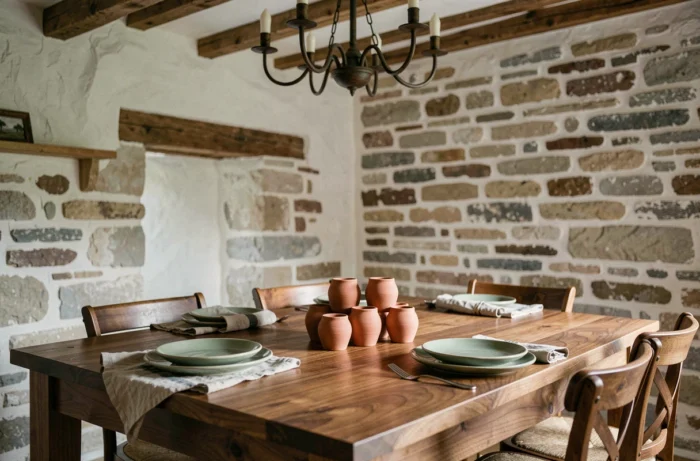
Solid wood pieces (oak, walnut, wild cherry) can withstand several rounds of sanding and refinishing. A scratched solid wood tabletop can look like new after a light sanding and the application of a suitable oil.
Melamine-faced furniture panels are more difficult to repair. If the edging comes loose or the surface warps, repairs can sometimes cost more than replacement. This is a limitation worth considering when choosing furniture in the first place: solid wood furniture can be repaired; cheap panels are replaced.
- Solid wood (oak, walnut, beech): can be sanded, refinished and repaired by a cabinetmaker or at a community workshop subsidised by EPR funds
- Rattan and cane: chair reseating and recaning are still practised by artisans, and the result has a character that is difficult to reproduce with new furniture
- Particleboard or melamine-faced panels: repairs are limited to surface damage; beyond a certain level of deterioration, replacement is often the more practical option
Neutral palettes and raw materials: the hallmarks of an elegant home
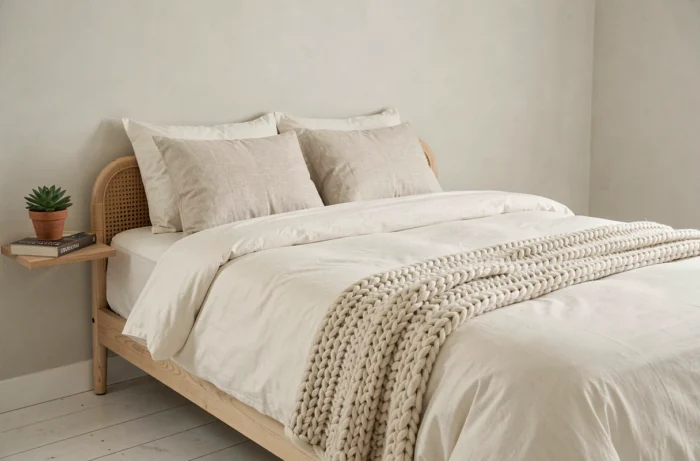
Competitors cover this topic extensively, but one point deserves clarification. Neutral colours (off-white, greige, light terracotta) create a warm effect only when paired with a variety of textures. A white wall, white floor and white sofa make a room feel cold, not pared back.
Warmth comes from layering: crumpled linen on a worn leather seat, a raw wood table on a wool rug. It’s the contrast between textures that creates elegance, not a uniform colour palette.
Wood, stone and linen: choosing materials for each room
Solid oak flooring works well in living rooms and bedrooms. In a kitchen or bathroom, natural stone (slate, travertine) stands up to moisture better than wood, provided it is treated. Linen and wool are best used for soft furnishings (curtains, cushions, throws) rather than wall coverings, where maintenance can make them less durable.
A common mistake is to use too many natural materials without a clear hierarchy. Two or three dominant materials per room are enough. Beyond that, the space loses coherence and the eye no longer knows where to rest.
Statement furniture and decorative objects: avoid clutter to keep the space clear
A timeless interior stands apart from a cluttered one through restraint. Decorative objects (vases, frames, sculptures) work best in small numbers and chosen with care. A single object on a shelf draws the eye. Ten objects lined up create visual noise.
The same principle applies to furniture. Every piece should have a clear purpose in the room. An entryway console is for keys and mail. If it becomes a permanent display surface, it adds clutter rather than enhancing the space.
- Limit decorative objects to three or four on each visible surface (shelf, sideboard, coffee table)
- Choose pieces with a personal story rather than decorative sets bought in bulk
- Rotate objects with the seasons to refresh the atmosphere without accumulating more
An elegant, welcoming home isn’t created by following a list of trends. It comes from thoughtful material choices: furniture whose composition you know, materials you can care for, and a number of objects the space can accommodate without feeling crowded. A style’s durability depends less on its name than on the quality of what it is made of.