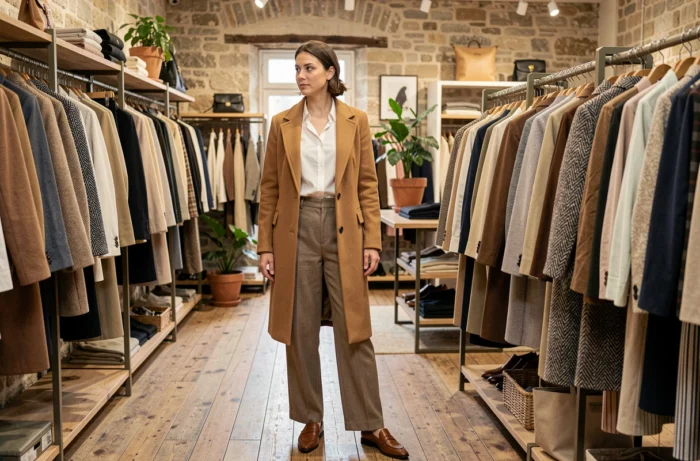
The Paris Fashion Week, which took place in early October 2026, confirmed a fundamental shift: the spring-summer 2027 collections are not just about spectacular silhouettes designed for social media. Several houses presented clothing intended for everyday wear, featuring sharp cuts and materials suited for increasingly hot summers. This gap between the runway image and the reality of the wardrobe deserves careful examination.
Light materials and summer heat: Parisian fashion responds to the climate
The spring-summer 2027 collections seen in Paris incorporate a rarely articulated factor by designers: heat. Gala explicitly links the lightness and breathability of the presented silhouettes to the heatwaves of the previous summer.
Transparent fabrics, flowing skirts, harem pants, and airy textiles are no longer just aesthetic choices. They serve as technical responses to challenging climatic conditions. Transparency, omnipresent on Parisian runways, caters to both thermal comfort and visual effect.
This trend raises a practical question: do the lightweight garments from the runway withstand everyday use in high heat, or do they remain fragile pieces reserved for special occasions? The answer varies depending on whether we are talking about accessible ready-to-wear or luxury house pieces whose technical fabrics justify their price.
Designers following this direction, like those observed in the fashion section of News Paris, reflect a lasting shift in the Parisian wardrobe towards pieces designed for comfort as much as for style.
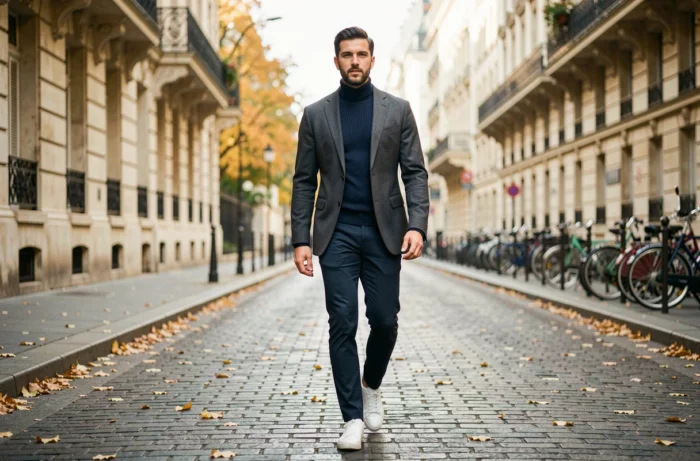
Minimalist wardrobe in Paris: The Row, Hermès, and discretion as a trend
Alongside looks laden with sequins and printed patterns, an opposing trend is emerging. Several Parisian collections presented in early October 2026 focused on sharp cuts, quality fabrics, and a limited palette. The Row, Hermès, and Celine embody this line.
Luxurious minimalism acts as a counter-signal. Where seasonal trends multiply bright colors and surface effects, these houses offer understated garments, whose value lies in the cut and material rather than immediate visual impact.
This positioning is not new, but it is gaining traction in a context where fatigue with ephemeral micro-trends is increasingly expressed. The sober coat, straight-cut trousers, and monochrome dress are becoming sought-after pieces precisely because they transcend seasons without appearing dated.
Colors and silhouette: what this minimalism changes
The palette narrows around neutral tones (beige, black, off-white, gray) and muted colors. The silhouette elongates, with natural shoulders and controlled volumes. Prints almost completely disappear from these collections.
For a woman building a sustainable wardrobe, these minimalist pieces represent a safer investment than a patterned seasonal dress. However, their price remains a real barrier: the noble materials used by these houses place these garments out of reach of mainstream ready-to-wear.
Sequins in broad daylight: when Parisian fashion shifts evening sparkle to the street
One of the most visible movements of this Fashion Week concerns the shift of evening codes to daytime outfits. Sequins, rhinestones, pearls, and golden garments appear in silhouettes intended to be worn in the city, during the day.
Julie Kegels and Weinsanto are among the designers embracing this direction. The idea is not to wear a gala dress to the office, but to incorporate shiny elements into an everyday outfit: sequined trousers paired with a simple sweater, a golden accessory combined with neutral clothing.
- Sequins and rhinestones are leaving the evening wardrobe to integrate into daytime outfits worn in the city
- Golden colors and pearls function as accents, not as dominant elements of the silhouette
- This trend requires a delicate balance: a single shiny element in a sober outfit, never an accumulation
The main risk is tipping into costume. Without precise work on proportions, a sequined garment worn during the day can appear out of place. Stylists recommend limiting the shine to one piece per outfit.
Transposing Parisian trends into a real wardrobe
Le Monde noted in its article from October 5, 2026, that actual wearability constituted a trend criterion in its own right during this Fashion Week. This remark deserves serious consideration, as it marks a break from years of collections primarily designed for image.
Autumn-winter and spring-summer: adapting trends to each season
The lightweight and transparent pieces seen for spring-summer 2027 do not directly transpose into an autumn or winter wardrobe. However, some principles transcend the seasons:
- The sharp cut and limited palette work equally well with a winter coat as with a summer dress
- Quality materials (wool, cashmere, heavy linen) offer a sustainable alternative to low-priced seasonal clothing
- A single golden accessory or a sequined piece is enough to update a sober outfit, regardless of the season
The most enduring trend of this Fashion Week may be the most discreet: prioritizing well-cut garments in materials suited to the real climate, rather than chasing every novelty. The Parisian collections of this season show that both approaches coexist, but the latter is gaining ground among buyers and designers alike.
The available data does not yet allow for measuring whether this movement towards sobriety will permanently alter the offering of accessible ready-to-wear.