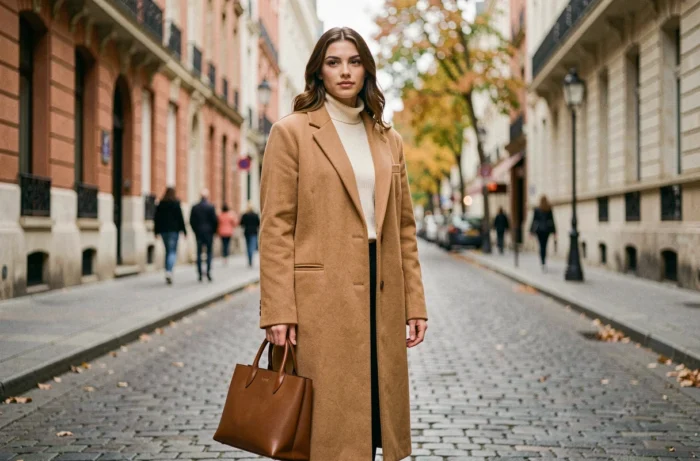
A fashion trend is defined by the recurrence of a visual element (cut, color, material) across multiple collections and simultaneous distribution channels. This season, the proposals oscillate between ample volumes, saturated palettes, and promises of textile durability. Behind these aesthetic directions, the question of the reliability of the innovations announced by brands becomes a key criterion for discerning buyers.
Textile Traceability: Distinguishing Real Innovation from Marketing Claims
When a brand announces a fabric as “eco-friendly” or “recycled,” the promise says nothing about the complete lifecycle of the garment. Offering a recycled material does not mean having a viable system for repair or reuse.
Three criteria allow for verifying the strength of a textile claim before purchase:
- The traceability of the fiber, from spinning to manufacturing, documented by independent labels (GOTS, OEKO-TEX) and not just a simple mention on the internal label.
- The physical durability of the garment: resistance to washing, seam integrity, color stability after several months of actual use.
- The actual reparability, meaning the existence of a tailoring service or spare parts offered by the brand itself.
Without these three verifiable points, a “sustainable” claim remains a seasonal argument that will disappear with the next collection. European regulations are also beginning to directly modify the clothing offer by imposing transparency requirements on the composition and end-of-life of products.
By exploring the fashion section of Le Temps qu’il Faut, one can find pieces whose detailed descriptions outline the composition and origin, facilitating this verification work.
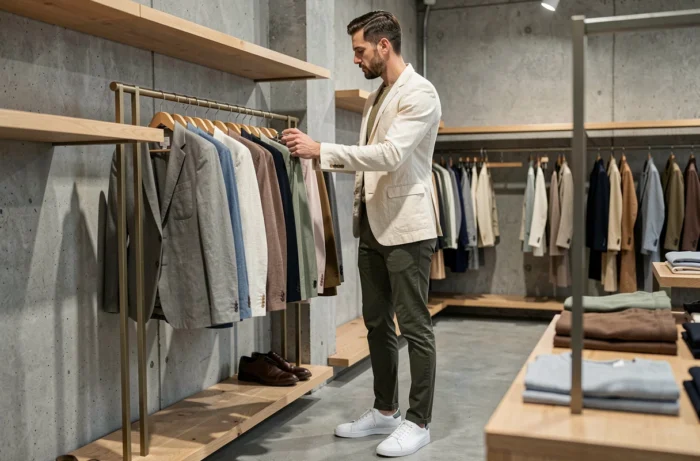
Fashion Cuts and Volumes for Fall-Winter: What the Runways Translate into Wardrobe
The spring-summer and then fall-winter 2026 runways have confirmed a clear direction: structured generous volumes replace shapeless oversized styles. Wide trousers with a defined waist, for example, maintain a clean line despite their fullness. The cut is not loose by default; it is constructed to fall in a certain way.
This season, Parisian collections have also highlighted texture combinations rather than flashy prints. Thick knit on fluid silk, rigid denim paired with soft jersey: tactile contrast becomes the driving force of style, more than color alone.
Seasonal Colors: Intensity and Natural Tones
The palettes oscillate between saturated tones (burnt orange, deep blue, mustard yellow) and reworked neutrals (rosy beige, mottled gray, off-white). The combination of a vibrant piece with a neutral base constitutes the most reproducible stylistic gesture for everyday wear. Rather than betting on a total colorful look, the trend favors a single point of strong color per outfit.
The return of burgundy and olive green in fall collections confirms a cycle that favors wearable shades over several seasons, far from gimmicky colors discarded after a few weeks.
Second-Hand and Seasonal Fashion: Not All Circuits Are Equal
The purchase of second-hand clothing is often presented as a uniformly virtuous gesture. Second-hand is fractured between solidarity reuse and commercial models, and the social or environmental impact varies significantly depending on the chosen circuit.
Online second-hand purchases, especially through high-logistics platforms (packaging, individual shipping, returns), can generate a greater impact than local reuse. An associative thrift store that sorts and resells on-site does not have the same footprint as a package shipped across the country.
Criteria for a Consistent Second-Hand Purchase
Before considering a second-hand garment as a sustainable choice, a few points deserve attention:
- Check the actual condition of the seams, closures, and material, not just the appearance in a photo.
- Favor short circuits (local consignment shops, associations) that limit transportation and reinject value into the local economy.
- Assess whether the purchase truly replaces a new purchase or if it adds to the total volume of clothing owned, which negates the environmental benefit.
Textile Innovation and Performance of Use: Beyond Aesthetics
Recent collections increasingly combine textile innovation and performance of use. Materials are no longer chosen solely for their visual appeal but also for their thermal comfort, abrasion resistance, or quick-drying capabilities.
This convergence between fashion and technicality is found in blends of natural and technical synthetic fibers. A coat can combine an outer wool layer with a thermal-regulating lining, without this being visible from the outside. The style does not change, but longevity and comfort increase.
The frequent pitfall remains the lack of proof. A label mentioning “technical fabric” or “innovative fiber” without specifying the process or supplier does not allow for distinguishing a real advancement from a commercial dressing. Demanding a detailed technical sheet remains the best reflex in the face of these claims.
This season’s fashion gains clarity when separating what pertains to style (cuts, colors, combinations) from what pertains to substance (traceability, durability, distribution circuit). The two dimensions coexist in the same garment, but only the latter allows one to know if a piece will last beyond the season that showcased it.