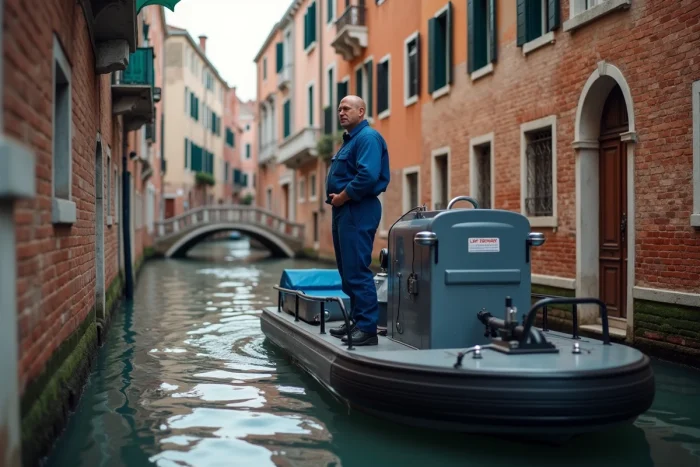
In Venice, a municipal regulation has prohibited the direct discharge of wastewater into the canals since 1977. However, some historic residences still lack connections to the modern sewer system, despite the penalties incurred.
The pressure of tourism exacerbates the fragility of the current system, already strained by aging infrastructure. The city faces the necessity of innovative solutions to preserve its lagoon ecosystem and architectural heritage while respecting contemporary environmental requirements.
Venice facing the challenge of wastewater management: a heritage at risk?
Protecting Venice’s historic center, classified as a UNESCO World Heritage site, requires constant vigilance. The maze of narrow streets, the fragility of facades, and the constant proximity of the lagoon necessitate juggling technical constraints and political decisions. This balance, never fully achieved, results in a complex and sometimes uneven wastewater management in Venice depending on the neighborhoods.
In Cannaregio, many installations date back to a bygone era, while other areas have benefited from recent modernizations here and there. Public authorities regularly remind of the stakes: respecting the old buildings without sacrificing hygiene and the proper functioning of the networks.
Limiting pollution in the canals and preserving the water quality of the lagoon are top municipal priorities. However, uncertainties such as rising tides, episodes of acqua alta, and tourism pressure disrupt an already precarious balance. The current system, strained during high tides, shows its weaknesses in certain areas, particularly in the south of Dorsoduro or near the Lido.
Wastewater management in Venice thus raises a series of concrete questions. The page “Waste Disposal in Venice: What Really Happens? – By Caroline and CO” provides an overview of practices, the limitations of the system, and the stakes for the future of the city of Venice. Decisions made today will impact the preservation of historic neighborhoods and the transmission of this unique heritage to future generations.
What systems are currently in place to preserve the quality of the canals?
To cope with the uniqueness of the lagoon and its urban fabric, wastewater management in Venice relies on a combination of complementary solutions. The traditional sanitation network faces countless obstacles here: narrow alleys, fragile foundations, and the omnipresence of water that dictates its own rules.
Here are the main systems currently deployed to meet the city’s challenges:
- In most old residences, particularly in Cannaregio and Dorsoduro, septic tanks remain the norm. They are subject to regular emptying and careful monitoring.
- More recent or renovated buildings incorporate decentralized treatment systems (SBR, MBR), capable of treating wastewater without altering Venetian architecture.
- Some neighborhoods like Lido, Giudecca, Cavallino, and Burano benefit from specific units that combine biological filters and the separation of rainwater and wastewater.
- The MOSE (Modulo Sperimentale Elettromeccanico) system primarily aims to limit the rise of water during exceptional tides, thus protecting treatment facilities.
Overall coordination is ensured by the Magistrato alle Acque, responsible for the maintenance and evolution of the network. For example, the SisTeMaV system embodies this desire for discreet innovation: automated monitoring, dynamic flow adjustment, sensors to anticipate overflow. However, generalizing this type of system throughout the city of Venice remains a significant undertaking, with each intervention requiring careful consultation and adaptation to the built heritage.
Future pathways to reconcile environmental preservation and Venetian heritage
In Venice, the tension between preserving the past and adapting to the present is expressed in every stone, every canal. In the face of climate change that multiplies episodes of acqua alta, the city must invent new models to manage its wastewater without renouncing its identity. The challenge is twofold: to reduce the impact of discharges into the lagoon and to preserve the urban fabric, aesthetics, and memory of the historic center.
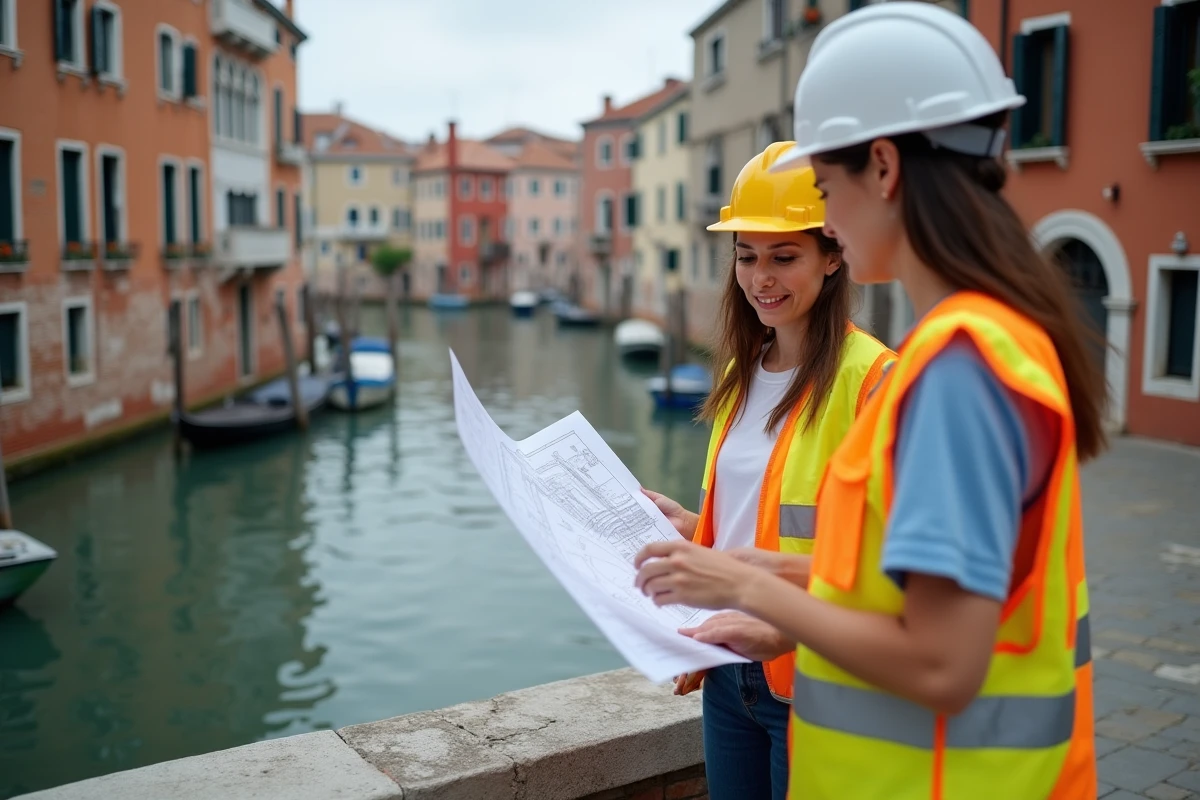
Experts warn of the risk of system saturation, exacerbated by the massive influx of visitors. In response, neighborhoods like Cannaregio or Santa Croce are exploring smart devices capable of adjusting real-time collection and wastewater treatment. Connected sensors and compact micro-stations, integrated into buildings without altering the landscape, pave the way for more responsive management.
Adaptation also relies on the renovation of old septic tanks and the gradual extension of separate networks, especially in vulnerable areas. Reducing organic discharges becomes a major issue for the biodiversity of the northern lagoon and for the protection of the city against rising waters. The coming years will see the emergence of pilot projects, driven by the concern to combine hygiene and the preservation of Venetian heritage.
Venice, at the crossroads of waters and time, walks a tightrope. The city cannot afford either stagnation or reckless advancement. With each tide, it reinvents the fragile balance that keeps it standing against the world.