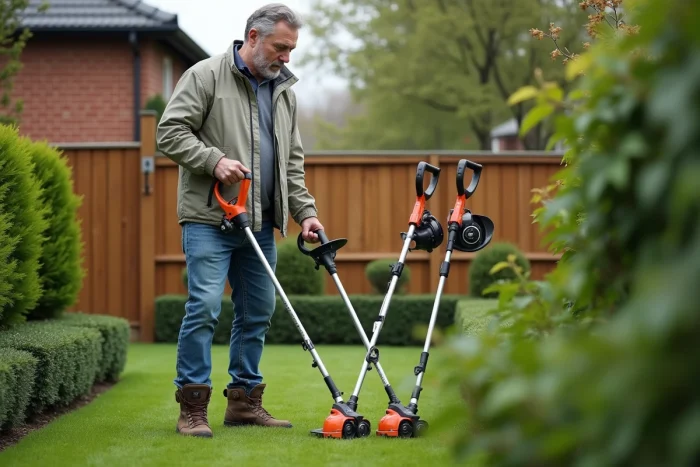
A string trimmer can ruin a lawn in just a few minutes if the power or cutting head is not suited to the terrain. Some models promise total versatility but neglect ease of maintenance or safety during use. More than half of users choose their tool based on price, without considering compatibility with their surface or the nature of the plants to be trimmed.
The line between string trimmers and brush cutters can be confusing. However, simply observing the realities of the terrain makes their distinct uses clear: it all depends on your garden and how you wish to maintain it.
String trimmer or brush cutter: understanding the differences to make a better choice
Distinguishing a string trimmer from a brush cutter is not a detail for those who want to keep an outdoor space tidy. The string trimmer, often still referred to as rotary trimmer, handles the finishing touches. It edges along pathways, trims contours, and reaches those little corners where the lawn mower never goes. Lightweight and precise, it delights those who want clean edges without wasting time.
In contrast, the brush cutter is designed to force a path where nature has reclaimed its territory: neglected areas, tall grass, brambles. Its bulkier size, often powered by a gas engine, and its robustness allow it to handle large areas without flinching. Ultimately, your choice depends mainly on the condition of the plot and the frequency of use. For domestic borders, a string trimmer is perfectly suitable. For real “cleaning” work, the brush cutter is essential.
To navigate the abundance of models, the comparison published on Coupe-bordure.com sorts through and digs deep: technical criteria, ease of use, user reports, everything is reviewed to go beyond marketing campaigns and highlight what really matters when you want a tidy garden, season after season.
What criteria should you prioritize to select the right tool for your garden?
Choosing the right string trimmer starts with asking what you want to do with it and on what type of terrain. The first question to settle: the motorization. To tackle dense grass or to multiply sessions, gas models offer power and total freedom of movement. For small spaces or occasional use, the corded electric version does the job perfectly: it remains lightweight, with no complex maintenance, as long as you are near an outlet. Battery models are gaining ground: more autonomous than before, they allow you to forget the cord, with appreciable maneuverability on uneven terrain, provided you choose a battery with good capacity.
Several characteristics will make a difference during your selection:
- Power: check the wattage or engine displacement, depending on the motor.
- Cutting width: a wide cut saves you time, while a narrow head allows for meticulous finishing.
- Weight: a lightweight device reduces fatigue, especially for longer sessions.
- Telescopic handle: adjust it to your height to spare your back.
- Pivoting head: very practical on vertical edges or along irregular fences.
- Cutting system: nylon line for flexibility, blades for tackling tougher vegetation.
Also, be sure to check the warranty duration, access to spare parts, and the brand’s reputation. A quick overview of user feedback will inform you: a reliable string trimmer shows several seasons of service without breaking down. Avoiding low-end models is also betting on fewer irritations and unexpected expenses in the long run.
Practical tips for effective use and simplified maintenance
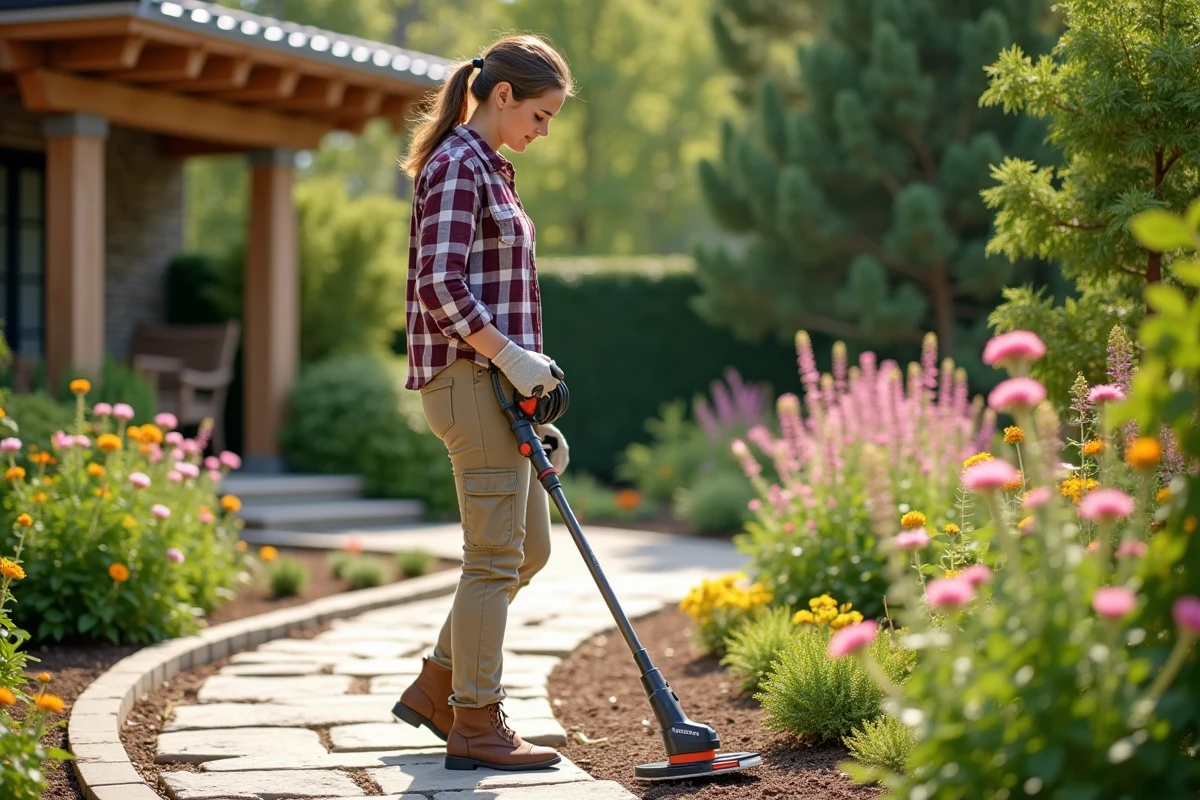
Trimming edges without surprises also involves thoughtful use. Adjusting the rotation speed according to the resistance of the grass helps preserve both the line and the motor. Setting the handle at the right height is not trivial: a few seconds of adjustment can prevent soreness the next day.
To keep your string trimmer performing well and reliably, these habits prove valuable:
- Always clean the cutting head after each use: dry grass can quickly stick to the components.
- Regularly check the condition of the nylon line or blades to anticipate their replacement before they break.
- For gas models, monitoring the oil level, spark plug, and air filter extends the machine’s lifespan.
- Store your device in a dry place to prevent the oxidation of metal parts.
A point never to take lightly: safety. Even in a small garden, goggles and gloves are essential as soon as you brush against a wall or stones. For proper maintenance of your equipment, detailed advice from professionals guides you, regardless of the type of motorization. Good maintenance always pays off, both in the field and over time.
Why settle for a rough garden? A string trimmer chosen and used wisely promises a tidy space. If this summer, the perfect symmetry of your lawn even attracts envious glances beyond the fence, you can just sit back and enjoy.