
A number, a sequence, and suddenly an entire household comes to life. Behind every Internet connection, a discreet mechanism orchestrates the ballet of digital exchanges: IP addresses, those invisible identifiers that hold the connected home together.
What are IP addresses really used for in a home network?
Behind the scenes of what is called the home network, the IP address acts as the identity card of each connected device. Whether it’s a computer, a smartphone, or a smart speaker, all must receive, via the Internet protocol, a unique combination of numbers to communicate, authenticate, and access the services of the household. Without this key, no data can flow, exchanges remain impossible, and the local network stays silent.
Households most often use a specific address range, known as “private.” For instance, the address 192.168.1.254 frequently serves as an access point to the administration interface of home routers or boxes. For those who wish to delve deeper, the page titled “Everything You Need to Know About IP Address 192.168.1.254: Its Meaning and Use – Intronaut” details its pivotal role in managing and configuring the local network.
The operation of IP addresses oscillates between two methods: static or dynamic. The DHCP (Dynamic Host Configuration Protocol) automatically assigns an address to each device connected to the network when it connects. Others, like a printer or a home server, benefit from a static address, ensuring their continuous accessibility. It is the subnet mask that delineates the boundary of the local network, preventing address collisions and organizing the flow of data.
This small ecosystem is not by chance: it is orchestrated, most often, by Internet Protocol version 4 (IPv4), sometimes replaced by IPv6. This invisible architecture ensures the consistency of communications between various connected devices while maintaining the confidentiality of family exchanges.
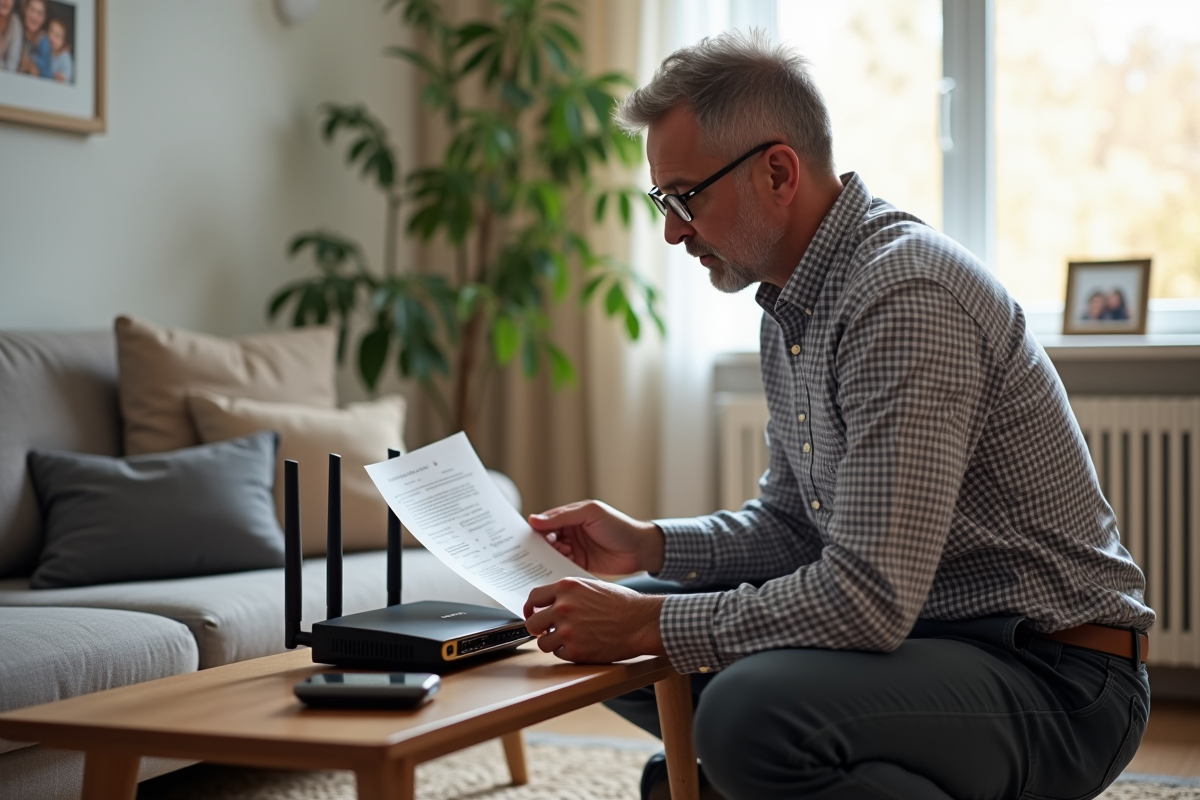
Differences Between Private and Public IPs, Practical Tools, and Tips for Managing Your Connection
The organization of a home network is based on a fundamental principle: distinguishing the dual nature of IP addresses. The private address, unique to each connected device in your home, operates away from the Internet: it belongs to ranges reserved by the Internet Engineering Task Force, such as 192.168.x.x or 10.x.x.x. The Internet box acts as a universal translator, converting these internal addresses into a unique public address via the NAT protocol (Network Address Translation). This boundary protects the local network and keeps intrusions at bay.
The distribution of dynamic addresses relies on DHCP: each new device receives a combination, valid for a given time. But if you need permanent access, such as for a local server, shared printer, or connected camera, you will need to set a static address by configuring the router or directly the concerned device.
To know precisely who occupies your internal network, several tools can assist you. Here are the most relevant to use on a daily basis:
- The administration interfaces of the box to identify connected devices
- Network scanning applications (like Fing or Angry IP Scanner) to list devices
- Regular checks of the subnet mask to avoid address conflicts
Enhance your security by installing a home VPN to protect your exchanges outside the local network and bypass certain geographical barriers. Stay attentive to updates of the Internet protocol on your devices and the status of the integrated firewall: it’s one of the barriers that maintain the integrity of your home network.
Ultimately, behind every assigned IP address, there is a balance to be preserved: between ease of access, connection robustness, and a shield against the outside. The key to a solid home network lies not in mysterious numbers, but in mastering what circulates in your home, and in maintaining constant vigilance against the small vulnerabilities of everyday life.