Online searches no longer work the way they did two years ago. Since July 2026, Google’s AI Overviews have been active in France and are changing how internet users access information about businesses.
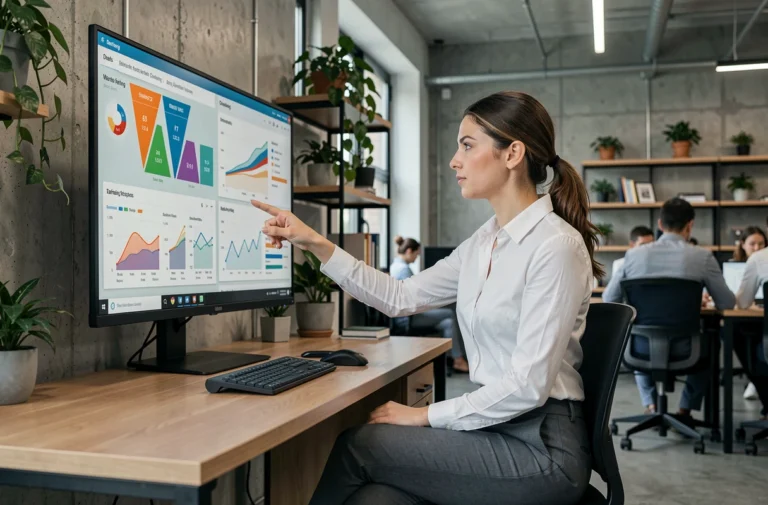
A study by the Pew Research Center, cited by TOP/COM, shows that the click-through rate to a traditional result drops to 8% when an AI summary appears, compared to 15% without this summary. Boosting your business’s visibility through digital and web marketing requires understanding this new landscape before deploying tools.
Visibility in AI summaries: a lever that traditional SEO does not cover
Natural referencing remains a foundation. Working on keywords, page structure, and meta tags is still useful for appearing in Google search results. The problem is that this work no longer guarantees effective visibility to the internet user.
AI Overviews draw their answers from various sources. According to an analysis by Botrank.ai, these summaries cite YouTube, Google Business Profile listings, public social media, and the press, in addition to well-positioned pages. A company that focuses its entire digital strategy solely on its website misses out on a growing portion of queries.
In practical terms, this means that presence on third-party platforms (videos, customer reviews, mentions in specialized media) now weighs in on a brand’s ability to be “cited” by AI. Agencies like beez-online.com incorporate this dimension into their web marketing strategies by working on both the site’s content and its distribution across the channels that algorithms exploit.
The notion of citability by AI assistants did not exist just a year ago. It relies on the consistency of information published across multiple sources: a complete Google Business Profile, recent reviews, video content, local press articles. The more these signals converge, the more the AI considers them reliable.
Content strategy and social media: what produces concrete results
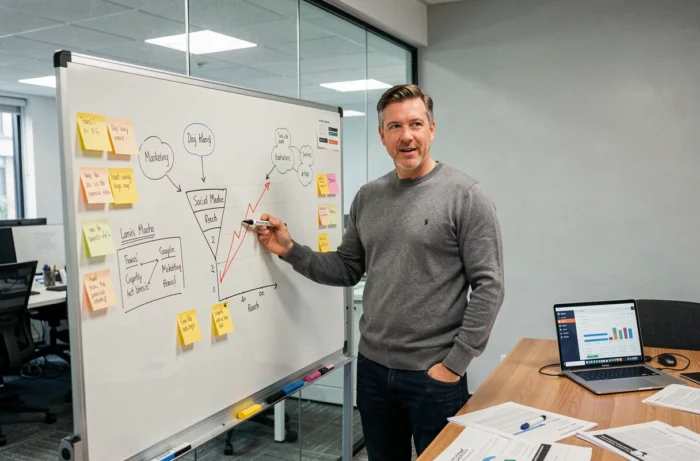
Publishing content remains the cornerstone of web marketing, provided you move away from the logic of “blogging for the sake of blogging.” An article that precisely answers a question posed by your potential clients is more valuable than a dozen generic posts about your industry.
Social media play a different role depending on the businesses. For a local business, a regularly updated Google Business Profile page and an account on a visual network (Instagram, TikTok) may suffice. For a B2B company, LinkedIn and publishing analyses or feedback produce more qualified contacts.
The video format has become a direct source of visibility in AI summaries. Botrank.ai identifies YouTube among the most cited platforms by AI Overviews. Producing short explanatory videos about your profession or products feeds both your presence on social media and your likelihood of appearing in these summaries.
Criteria for prioritizing your distribution channels
- Identify where your customers seek information: Google Maps for local, LinkedIn for B2B, Instagram or TikTok for visual products. There’s no need to be everywhere if your audience isn’t there.
- Assess your realistic production capacity: it’s better to publish one quality piece of content per week than five rushed posts. Consistency matters more than volume.
- Measure results with tracking tools (Google Analytics, native social media statistics) and adjust your strategy each quarter rather than continuing a strategy that does not generate traffic.
Local SEO and Google Business Profile: an underutilized angle by many SMEs
Local SEO remains one of the most cost-effective tools for businesses that receive customers physically or operate in a defined geographical area. A complete and up-to-date Google Business Profile directly influences visibility in Google Maps and local results.
Field feedback varies on the exact impact of customer reviews on local ranking, but their role in the purchasing decision is documented. An internet user comparing two local providers almost systematically checks reviews before making contact. Responding to reviews (both positive and negative) sends a signal of activity to Google and reassures prospects.
Often overlooked elements on the Google Business Profile
- Secondary categories: adding specific categories (not just the main category) allows you to appear in complementary queries that your competitors do not target.
- Google Business posts: few businesses use this feature, which allows for publishing news, offers, or events directly in the profile. These posts contribute to the freshness signal that Google takes into account.
- Attributes (special hours, accessibility, payment methods): each filled field increases the richness of the profile and the likelihood of appearing in local search filters.

Compliance and regulatory framework: constraints that affect your digital strategy
Web marketing does not operate outside the law. The GDPR governs the collection of personal data through your forms, newsletters, and tracking tools. The European AI Act, which is gradually coming into force, imposes transparency obligations when content is generated by artificial intelligence.
For businesses that use AI in their marketing (chatbots, text generation, personalization), the AI Act imposes a clear information obligation when content is produced by AI. Ignoring these rules exposes you to sanctions, as well as a loss of customer trust.
The Digital Markets Act (DMA) also changes the game: large platforms must open up their data and access conditions more. For SMEs, this can translate into new visibility opportunities on marketplaces or alternative search engines, even if the concrete effects remain to be observed in the coming months.
The digital visibility of a business is now built on multiple layers: a well-referenced site, consistent third-party presences (social media, video, reviews), a well-maintained local profile, and regulatory compliance that avoids unpleasant surprises. The arrival of AI summaries in search results reshuffles the cards, and companies that diversify their channels now are getting a head start over those that rely solely on natural referencing.