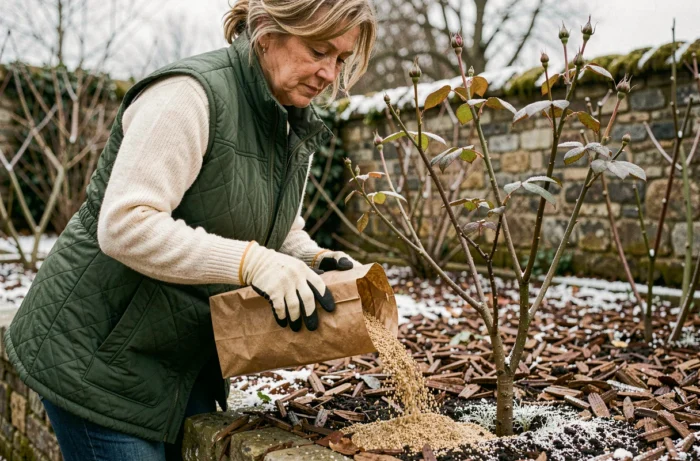
Choosing a fertilizer for winter is less about selecting a product and more about deciding if the plant actually needs it. The Royal Horticultural Society reminds us that very few plants require fertilizer during the cold months, even among those that bloom in winter. The determining factor is not the date on the calendar, but the observed growth activity: new leaves, forming stems, active roots.
NPK Ratio in Winter: What Each Element Provides According to the Season
Nitrogen (N), phosphorus (P), and potassium (K) serve different purposes when growth slows down. An excess of nitrogen at the end of the season stimulates tender shoots that cannot harden before frost. In contrast, potassium strengthens cellular resistance to cold and regulates water exchanges.
| Element | Main Role | Winter Relevance |
|---|---|---|
| Nitrogen (N) | Vegetative growth, foliage | To be significantly reduced, or even eliminated |
| Phosphorus (P) | Root development, flowering | Useful in moderate doses for roots |
| Potassium (K) | Stress resistance, water regulation | Priority for frost tolerance |
A formulation rich in potassium and phosphorus, with minimal nitrogen, corresponds to the suitable winter profile. Fertilizers labeled with a low first NPK number (e.g., 3-5-8 or 2-4-7) follow this logic.
To find ideas on Envies de Jardin, several specifically dosed mixtures for the cold season are detailed with their NPK ratios.
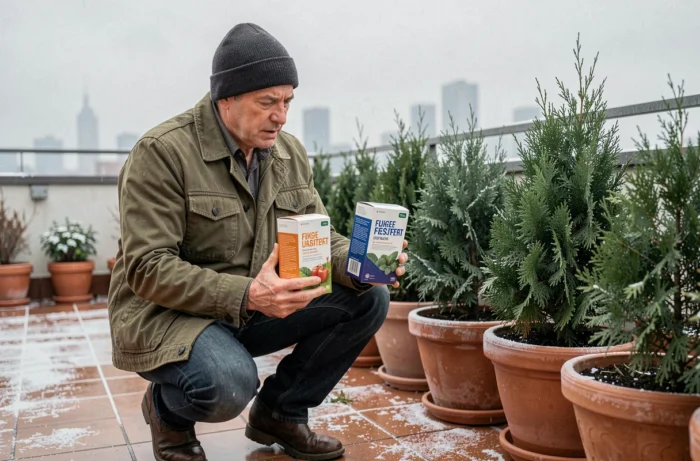
Organic or Mineral Fertilizer for Winter Fertilization
The choice of profile (organic or mineral) affects the speed of nutrient release in the soil, a parameter that changes completely in winter.
Organic Fertilizers: Slow Release and Soil Life
Ground horn, bone meal, or guano release their nutrients gradually through decomposition by soil microorganisms. In winter, this biological activity slows down with the temperature. An organic fertilizer spread in autumn only releases its nutrients in spring, making it a delayed investment rather than immediate fertilization.
This delay has a clear advantage: no risk of root burn from excess concentration, and a gradual supply that accompanies vegetative recovery.
Mineral Fertilizers: Immediate Availability, Increased Risk
Soluble mineral formulas act quickly. In cold soil where roots absorb little, salts remain in the substrate. The accumulation of unabsorbed salts can damage fragile roots, especially in pots where the volume of soil is limited.
For potted plants overwintered indoors, a very diluted liquid fertilizer remains feasible, but only if the plant shows active growth.
Indoor Plants in Winter: Brightness Matters More Than the Season
A heated apartment does not replicate outdoor dormancy conditions. The ambient temperature maintains a minimal metabolism. The limiting factor becomes light, not heat.
- A plant placed near a south-facing bay window or under horticultural lighting can continue to produce leaves in December. In this case, a diluted fertilization is justified.
- A plant far from windows, in a hallway or a poorly lit room, does not grow, even at 20 °C. Any fertilizer applied accumulates without being absorbed.
- Orchids, often in bloom during winter, tolerate a low-dose phosphorus fertilizer to support ongoing flowering, provided the substrate is regularly rinsed.
Observing the plant before fertilizing remains the most reliable rule. No new leaf, no visible new root: no fertilizer.
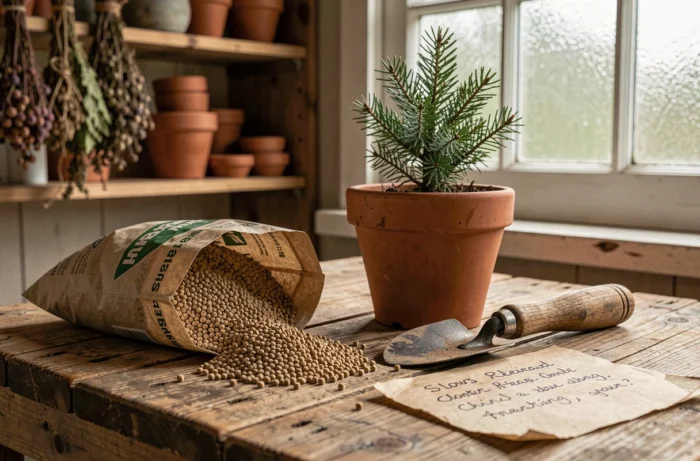
Timing for Stopping Nitrogen for Outdoor Plants
Timing is as important as the product. A late nitrogen application causes exactly the problem one seeks to avoid: young, waterlogged shoots that freeze at the first cold snap.
The documented horticultural recommendation suggests stopping nitrogen fertilizers six to eight weeks before the usual date of the first frosts. For a region where frosts typically arrive in November, this means a last nitrogen application by September at the latest.
This timeframe allows plant tissues to harden (hardening for shrubs, lignification of stems). Potassium fertilizers, on the other hand, can be applied later in the season, as potassium does not stimulate tender growth.
Adapting to Local Climate
In Mediterranean areas, where frosts are rare, the stopping of nitrogen can occur later. In mountainous regions or northern France, the autumn fertilization window is shorter, sometimes limited to a few weeks in September.
Organic amendments (compost, decomposed manure) spread on the surface before winter play a different role: they enrich the soil without immediate fertilizing effect. Organic mulching also protects soil microbial life from frost, improving nutrient availability during thawing.
The best winter protection for a plant is not always a fertilizer. A well-structured soil, suitable mulching, and the absence of late nitrogen fertilization are sufficient in most garden situations. For indoor plants, it is actual growth, not the month on the calendar, that determines the need.