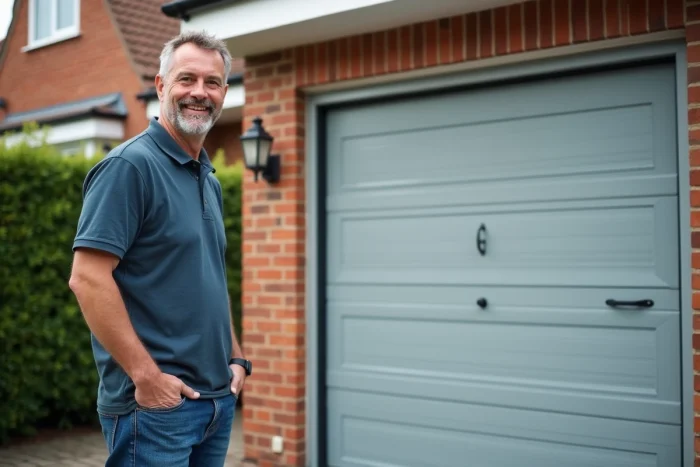
An integrated gate in a tilting garage door is not just a simple technical detail. It changes access, imposes a new logic of use, and multiplies security requirements. Yet, despite the growing demand for solutions that combine comfort and safety, compatibility between gates and automation remains, for many manufacturers, far from widespread.
As insulation standards tighten and anti-pinch devices become mandatory, every technical choice weighs heavily: materials, locking systems, ergonomics. The offerings are expanding, but some models still struggle to correct old flaws, particularly regarding waterproofing or daily use. The result: buyers attracted by catalogs sometimes face unexpected compromises.
Why integrating a gate into your tilting garage door changes daily life
Installing a gate in a tilting garage door is not succumbing to a trend. It’s choosing practicality, day after day. No need to open the entire door for a quick trip: the integrated gate shortens trips, avoids drafts, and preserves silence. This partial opening limits wear on parts and sustainably reduces thermal losses.
Choosing a tilting garage door with a gate addresses several priorities. In terms of security, a well-designed gate equipped with a multi-point lock seriously complicates the task for burglars. In terms of comfort, it facilitates pedestrian access, useful for unloading groceries, taking out a bike, or moving from a workshop to the garden effortlessly. Insulation, often underestimated, maintains its effectiveness thanks to a properly adjusted gate.
In practical terms, choosing a tilting door with a gate influences the garage layout, the security of belongings, and the household’s energy consumption. This passage then becomes more than just an access point: it integrates into the home, combining utility and technical requirements.
What criteria to prioritize for a truly suitable tilting garage door with a gate
Choosing a tilting garage door with a gate involves much more than an aesthetic choice. Above all, it is essential to ensure that the garage door dimensions exactly match the opening and intended use. Accurate measurements prevent unpleasant surprises and guarantee a durable installation.
The material affects strength, maintenance, and insulation. Steel, aluminum, or wood, each solution has its advantages: increased resistance, reduced maintenance, superior thermal performance. A peripheral seal around the gate adds significant value for insulation and helps combat air infiltration.
Security should not be left to chance. Opt for a gate equipped with a multi-point lock, with independent locking. Models that include reinforced hinges or anti-lift systems provide real resistance to break-in attempts.
Ease of use also depends on ergonomics: flat threshold, appropriate width, easy-to-handle handle. Some manufacturers offer custom garage door options: glazing, colors, grooves, or tailor-made adaptations, to be chosen according to needs.
Here are a few points to examine before making your choice:
- Custom garage door: designed for your space, it avoids having to compromise on access and use.
- Equipped garage door: adding portholes or ventilation grilles improves natural light and ventilation.
- Garage door quote: compare prices, but also the options and guarantees included in each offer.
With the variety of garage doors with gates on the market, it’s worth laying out each criterion on the table. Taking this time is betting on security, practicality, and durability, and avoiding many disappointments.

Materials, automation, security: an overview of options for an informed choice
Material: It is the heart of robustness and longevity. Galvanized steel is favored for its resistance and ability to withstand frequent use. Aluminum, lightweight and rust-resistant, is suitable for garages exposed to humidity. Wood, rarer when an integrated gate is involved, requires more attention but offers a warm and timeless finish.
Automation: garage door automation truly simplifies life. Opening the door without getting out of the car in the rain, or closing the garage with a single gesture, is a welcome comfort. Several systems exist: axis motor for rolling doors, ceiling rail for sectional or tilting models. Pay attention to compatibility with the gate: on some models, the motor automatically shuts off if the gate is not locked, to avoid any risk of accidents.
For a quick overview of security and home automation points not to overlook:
- Garage door security: multi-point lock, anti-lift reinforcements, obstacle detection.
- Smart sensors to block automation if the gate remains open.
- Connected options: remote control, operation via mobile app.
Thermal insulation remains a significant issue, especially with a gate. A well-insulated panel protects against cold, reduces energy losses, and improves overall comfort. It’s also better to adapt the finish to the garage ceiling and the type of outflow (vertical or ceiling), for harmonious integration and smooth operation.
Ultimately, each tilting garage door with an integrated gate tells a story of uses, constraints, and requirements. The right choice is the one that allows you to enter, exit, and live your daily life without friction or unpleasant surprises. Between security, practicality, and insulation, it’s up to each person to write the next chapter that reflects them.