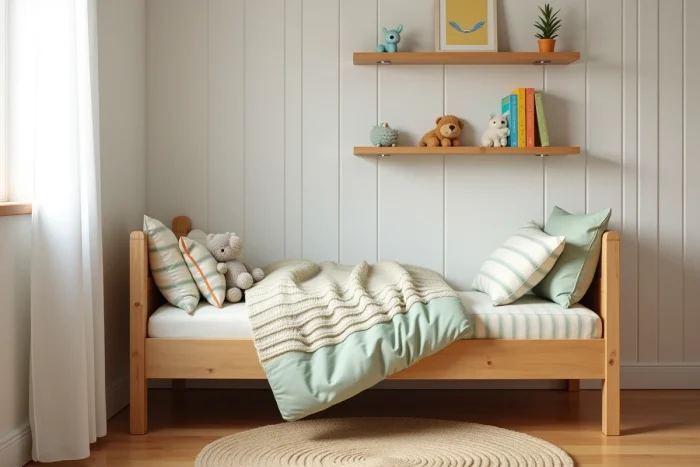
A warm children’s room rests on a balance between materials, shades, and space organization. Before choosing a theme or accessories, the very structure of the room, its coverings, and its furniture condition the quality of the result. This article details the technical fundamentals and then the concrete decorative levers to create a children’s room that is both trendy and sustainable.
Paints for children’s rooms: understanding the HQE 2026 standard
The choice of paint is not limited to color. Since February 2026, decree no. 2026-127 extends the High Environmental Quality (HQE) label to interior paints intended for children’s rooms. This text imposes enhanced testing on formaldehyde emissions, a volatile organic compound that irritates the respiratory tract.
In practice, certified paints go beyond the simple A+ rating displayed on the cans. They must meet emission thresholds measured over a longer period after application. For a baby’s or young child’s room, checking for the HQE mention on the label ensures healthier indoor air, especially in the first months following the work.
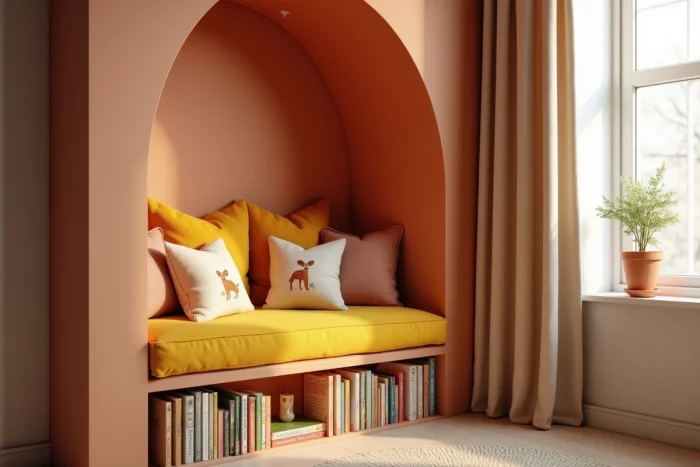
On the palette side, neutral tones and soft colors (terracotta, sage green, gray-blue) remain the most versatile bases. They easily pair with light wood furniture and allow for evolving decor without repainting for each birthday. A wall in a bolder shade is enough to add character. On lapetiteemma.fr, the textile assortments offered combine well with this type of palette.
Shared children’s room: harmonizing two personalities in one space
When two children with opposing tastes coexist, the temptation is to divide the room into two distinct universes. The result often produces a sense of visual clutter. A more effective approach is to establish a common neutral base and then personalize by targeted zones.
The common base: walls, floor, and main furniture
The color of the walls, the flooring, and the style of the main bed or desk must remain consistent. Light wood flooring or a vinyl floor in a solid tone creates this continuity. Walls painted in a soft shade (off-white, beige, pearl gray) serve as a backdrop without favoring one child over the other.
The shared furniture (wardrobe, common shelves) benefits from remaining in natural materials and a simple design. Raw wood or rattan withstands the test of time and trends without becoming outdated.
The personalization zones
It is at the level of bedding, the bedside wall, and accessories that each child expresses their preferences. Here are some concrete levers:
- A different panoramic wallpaper on each headboard, ensuring that patterns are chosen within the same color range to maintain unity
- Cushions, throws, and fairy lights unique to each child, stored in individual fabric or wicker baskets
- Dedicated wall shelves where each child can place their books, figurines, or drawings without encroaching on the other’s space
This method respects everyone’s tastes while maintaining a calm visual reading of the room.
Acoustic panels made of plant-based felt: a decorative and functional accessory
Montessori rooms increasingly incorporate acoustic panels made of plant-based felt. According to a study by INSERM published in March 2026, these elements promote a reduction in ambient noise and better sleep in young children.
Beyond their acoustic function, these panels come in decorative shapes (clouds, leaves, animals) and various colors. Fixed to the wall above the bed or in a reading corner, they add texture and visual warmth. Plant-based felt provides a raw and soft aspect that complements wood and natural textiles well.
Compared to classic wall stickers, these panels offer a practical advantage. UFC-Que Choisir reported in February 2026 a significant increase in parental complaints about the premature wear of washable wall stickers. Reusable silicone adhesive films and rigid wall panels resist better against scratches and repeated handling by children.
Storage and decorative accessories: choices that last
A well-organized space always looks warmer than a cluttered room, regardless of the decorating budget invested. Storage is an integral part of decoration.
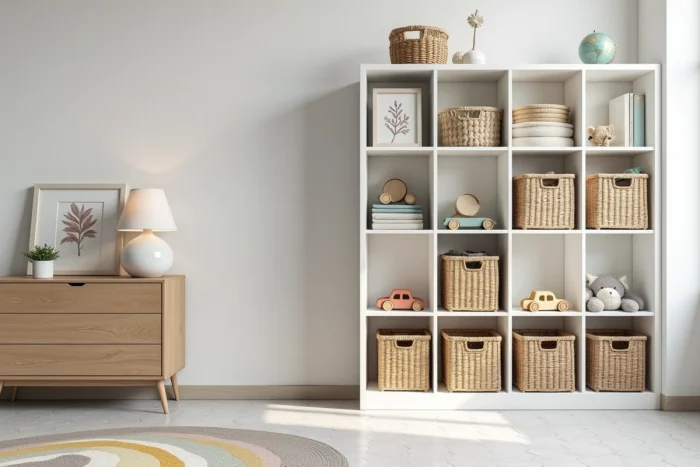
- Stackable wooden boxes serve both as toy storage and decorative support (they can be painted or left raw)
- Child-height wall hooks encourage independence and free up floor space
- A natural fiber rug (jute, woven cotton) visually delineates a play area or reading corner without partitioning
- DIY decorative objects (paper garlands, homemade photo frames) personalize the space at a low cost and can be easily renewed
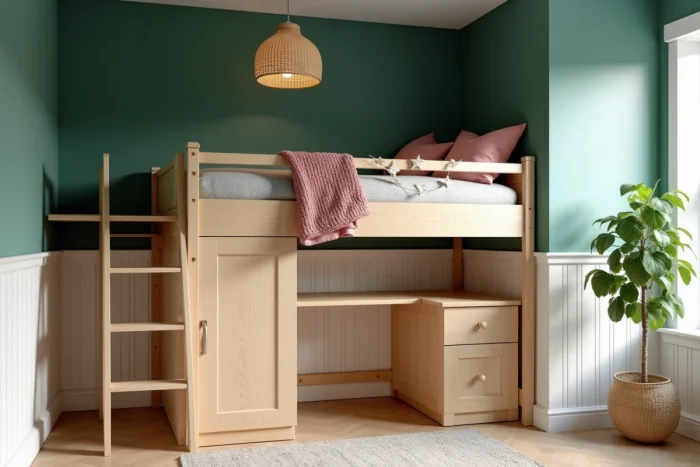
Transformable furniture (extendable bed, height-adjustable desk) represents a higher initial investment but accompanies the child for several years. Combined with renewable accessories (duvet covers, posters), it allows for evolving the room’s style without replacing everything.
The success of a children’s room relies less on the number of stacked decor ideas than on the coherence between materials, colors, and space organization. A healthy base (HQE paint, natural wood, neutral tones) leaves plenty of room for personal touches that make a difference, even when two children must coexist in the same room.