
Some tattoo designs, once associated with marginalization or rebellion, today express more nuanced states of mind, such as isolation or resilience. Far from being mere ornaments, these symbols are rooted in personal stories where solitude is neither a simple retreat nor a weakness.
From the kanji for “solitude” to the character Gaara in pop culture, thousands of people choose to inscribe on their skin the trace of an intimate experience, often linked to the strength drawn from isolation. These tattoo choices are part of a tradition that is both individual and universal.
Solitude and strength: why do these themes inspire so many tattoos?
Solitude is not the void it is sometimes accused of being. On the skin, it becomes a narrative, an affirmation, a discreet mark of an inner strength that trials have not broken. Those who opt for this body language do not choose randomly: each symbol worn reveals a capacity to weather storms, standing tall, sometimes isolated but never erased.
The tattoo then acts as a declaration. A tree with deep roots evokes patience, adaptation, and slow growth through the seasons. The lion speaks of courage, fidelity to oneself, a journey that is sometimes solitary but carried out with confidence. Anchor, mountain, all serve as markers for those who refuse to sink, even when everything wavers. These images converse, unvarnished, with the intimate experience of isolation.
If symbols of solitude in tattoos are appealing, it is not to claim uniqueness at all costs. It is rather a way to give meaning, to tell a story, to show the world the mental strength that allows one to move forward, even discreetly. Tree, mountain, anchor, or thyme: each motif carries a story, between embraced fragility and regained energy. Ultimately, these silent narratives, etched in flesh, give tattoos their full dimension of expression.
The symbols and motifs that express isolation: between tradition and modernity
Representing solitude on the skin means choosing from a range of evocative symbols, each carrying nuances. Here are some examples that often appear in tattoo studios:
- Solitary wolf, migratory bird, or cherry blossom, all motifs that tell the ambivalence of isolation: freedom, fragility, fidelity to oneself.
- The wolf embodies strength and independence, while the bird takes flight, symbolizing a journey without ties.
- The lotus flower suggests elevation, an inner rebirth, while the cat embraces mystery and autonomy. Here, the approach goes far beyond aesthetics: it is a way to fix a unique experience on the skin.
Recent trends also favor more understated forms. Thus, one encounters clean lines, desolate landscapes, sometimes a silent city under the starry night. The minimalist motif appeals with its restraint, preferring suggestion over obviousness.
- A floral motif evokes impermanence and rebirth.
- Geometric or ornamental shapes remind us of structure, repetition, and tenacity.
- The solitary traveler, silhouette on the road, symbolizes departure or self-affirmation.
The field of possibilities expands: body art thus offers a true alphabet, where each motif dialogues with the intimate without ever confining isolation to a single box.
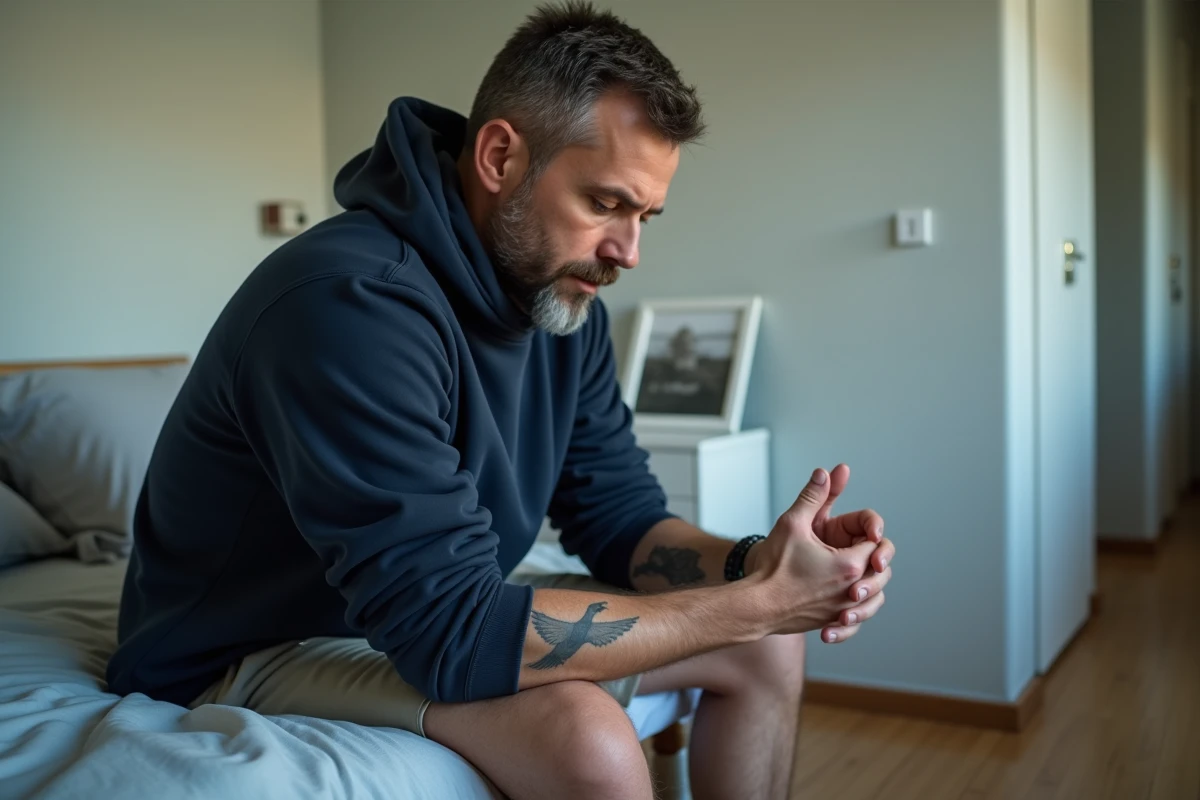
Gaara, solitary birds, and other significant inspirations for a meaningful tattoo
In the world of tattoos, certain figures stand out, balancing raw strength and the poetry of isolation. Gaara, a prominent character in manga culture, crystallizes the desire to draw from solitude a source of resilience. Sporting a strong symbol on his forehead, Gaara inspires those who see in their intimate scar an armor and a springboard. This choice expresses transformation, a capacity to elevate wounds into vital momentum.
Far from fiction, the solitary bird remains a powerful reference. The flight, the unique trajectory, the distance taken from the group: all embody an assumed autonomy. The phoenix, too, a symbol of rebirth, conveys the transition from fall to reconstruction, transforming the tattoo into a living narrative, a testament to the ability to rise again.
Some motifs draw from tradition to explore the complexity of isolation. The Hannya mask, for example, expresses passion, transformation, and protection. Others prefer sobriety: delta triangle, yin and yang, arrow, date, or year of birth. Each thus builds their own language, tracing a unique path on their skin, reflecting a life choice or a claimed spiritual connection.
At the crossroads of the visible and the hidden, tattoos that tell of isolation outline personal and universal paths. It remains to be seen, for each, what the mark they choose to bear will mean tomorrow, alone or not, in the light or in the shadow.