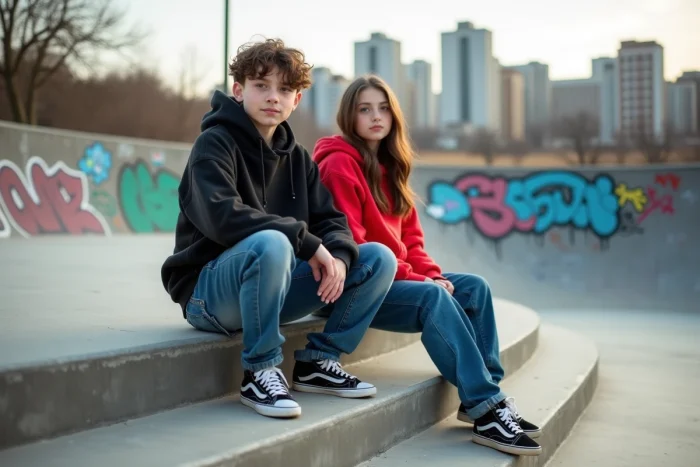
In 1994, a California brand imposed its logos on streetwear, disrupting the traditional fashion economy. The dress codes derived from countercultures, long marginalized, become references for major fashion houses.
The boundaries between luxury and urban culture gradually blur. Unexpected collaborations accelerate this phenomenon, shaking up established hierarchies and redefining the fashion aspirations of an entire generation.
From rebellious roots to the runway: how streetwear has transformed fashion
Streetwear has never aimed to conform. Born in the 1970s and 1980s, it exploded to the rhythm of hip-hop beats, skateboards, and militant slogans chanted in the heart of working-class neighborhoods. Wearing a hoodie, sporting unique sneakers, or flaunting an oversized t-shirt is about claiming an identity, rejecting the formatting imposed by mass fashion. Each piece tells a story of boldness, sometimes rebellion, often raw creativity.
Gradually, urban fashion crosses the borders of its cradle. Years pass, styles refine, but the rebellious spirit remains. Streetwear captivates global youth, appears in music videos, and inspires advertising campaigns. Designers sense the potential, seize its codes, and reinterpret them on the runways: wide jackets, twisted logos, technical materials. Hierarchies blur. Runways no longer dictate trends; they catch them on the fly from the street.
The evolution of streetwear gradually disrupts the boundary between urban culture and luxury. Historic houses no longer hesitate to invite designers from this movement, to merge universes, to make streetwear a playground for fresh ideas and unexpected silhouettes. To grasp the magnitude of the phenomenon, the history of streetwear on Klottra traces the journey, mutations, and global impact of this dynamic. Today, the street dictates its laws to haute couture, and trends are invented at the crossroads of multiple cultures, between collective affirmation and a constant quest for novelty.
What are the brands and styles that have shaped the identity of streetwear?
A visual language forged by the street
This movement has forged a strong identity through key pieces: boldly designed sneakers, hoodies, graphic t-shirts. In Paris, New York, Tokyo, each major city leaves its mark, adapting streetwear to its own codes and the energy of its streets. The creativity of the street fuels a fashion that continually reinvents itself, oscillating between breaking with traditions and a thirst for novelty.
Pioneering brands and unexpected collaborations
Some brands have become cult favorites because they have captured the spirit of youth, subverted luxury codes, and occupied public space. Their strength also lies in their ability to create surprise, to bet on limited editions, and to collaborate with artists whose universe aligns with that of the street. When streetwear meets haute couture, conventions explode. Skate, hip-hop, graffiti infuse their influences, and the oversized aesthetic blends with sharper cuts.
Here are the key pieces that embody this stylistic revolution:
- The hoodie, which has become the symbol of a generation in search of freedom.
- The sneaker, a universally coveted object, worn without distinction of gender.
- The graphic t-shirt, which claims both belonging and a message.
Prices range from the most accessible to the most exclusive, depending on whether it is a mass-produced piece or a collaboration between an independent label and a luxury house. Streetwear is no longer limited to clothing: it embodies a lifestyle, a boundary-less state of mind, that permeates all contemporary fashion.
Streetwear today: a mirror of global culture and a trend laboratory
A global scene, multiple identities
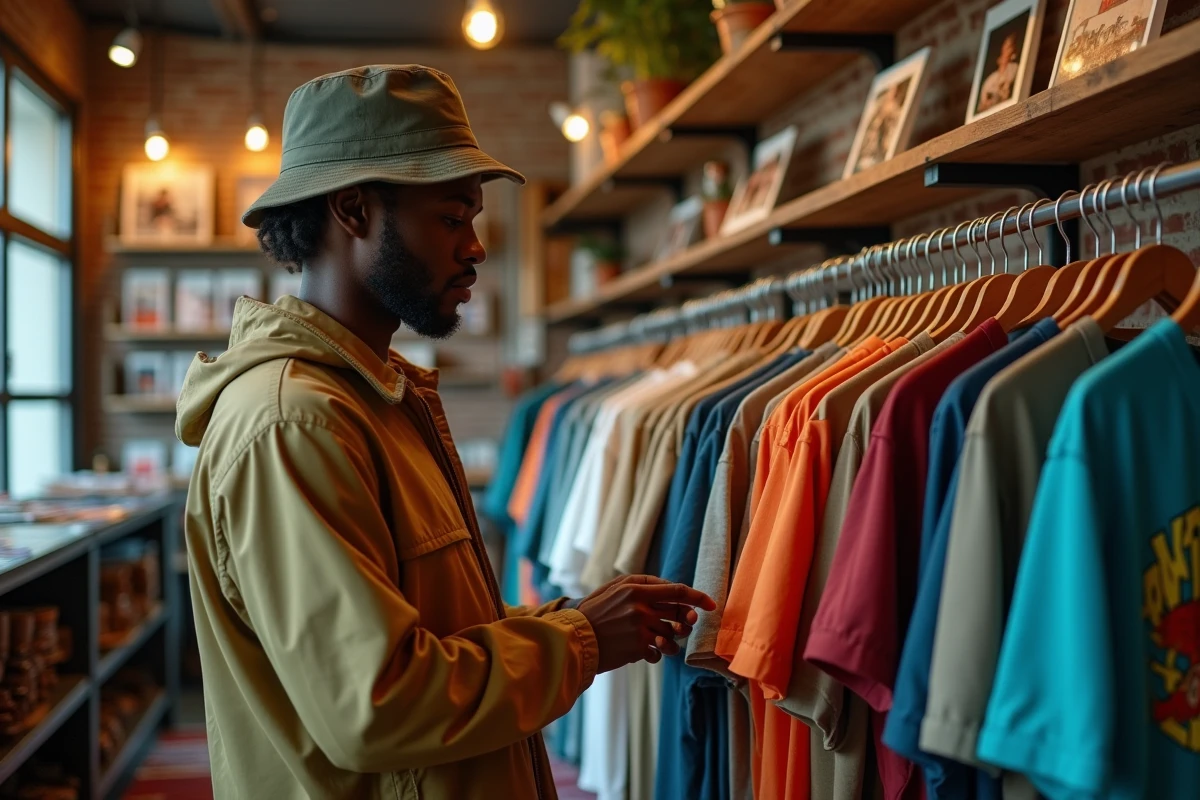
Streetwear now plays a driving role in fashion all over the planet. It is no longer just a style, but a vast movement where local influences and the instant circulation of images intersect. In Seoul, Los Angeles, London, the urban silhouette adapts to each context, blending baggy pants, technical materials, and striking accessories. Social media amplifies every novelty, transforming a simple logo into a global phenomenon.
Laboratory of innovation and diversity
Streetwear relentlessly absorbs new ideas, opens up to all influences, and continually reinvents itself. Limited collections, born from collaborations with artists or unexpected alliances, generate unprecedented enthusiasm each season. The movement does not stop at the street: it constantly dialogues with haute couture, blurring the lines between luxury and everyday life. The affirmation of a streetwear style today involves bold combinations of colors, unexpected cuts, and a constant search for originality and expression.
Some key dynamics illustrate this vitality:
- Creators from urban culture disrupt the codes and impose their vision with each new collection.
- Streetwear fashion evolves at a breakneck pace, driven by a constantly renewing current.
Choosing clothes, renewing them, becomes a daily act full of meaning, revealing a sense of belonging, a desire to experiment, and to express oneself visually. Streetwear, always in motion, remains this testing ground where tomorrow’s trends are born, both on the runways and in the street. The backdrop changes, but the energy never wanes.