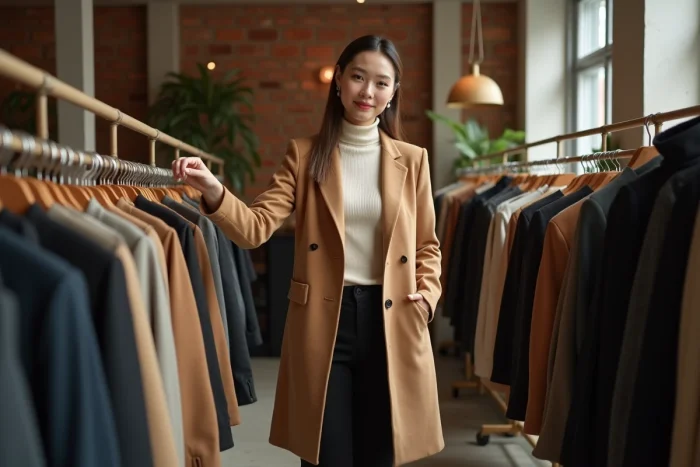
Each season brings its share of new pieces, color palettes, and silhouettes. Fashion trends are not just about copying the runways: they serve as benchmarks for creating a personal style that suits one’s body shape and daily life. Rather than chasing every micro-trend, it’s better to understand the underlying movements that are shaping women’s fashion this year.
Capsule Wardrobe: The Foundation of a Cohesive Style Year-Round
You may have noticed that some women wear few pieces but always seem well-dressed? The principle can be summed up in one word: the capsule wardrobe. The idea is to gather about ten versatile garments that can effortlessly combine with each other.
According to the “The State of Fashion 2024” report by McKinsey and Business of Fashion, the purchase of versatile signature pieces is significantly increasing among women aged 25 to 45 in Western Europe. The trend is clear: fewer clothes, but better chosen. A well-tailored blazer, premium jeans, and a quality trench coat form a trio that transcends seasons without losing relevance.
To follow fashion trends on Zaza Mode, this foundation of basics allows for the addition of strong pieces of the moment without disrupting the entire wardrobe.
Building this base requires a simple rule: each added piece must pair with at least three others already present. If a garment only works with one outfit, it clutters more than it serves.
Seasonless Looks: Mixing Summer and Winter in One Outfit
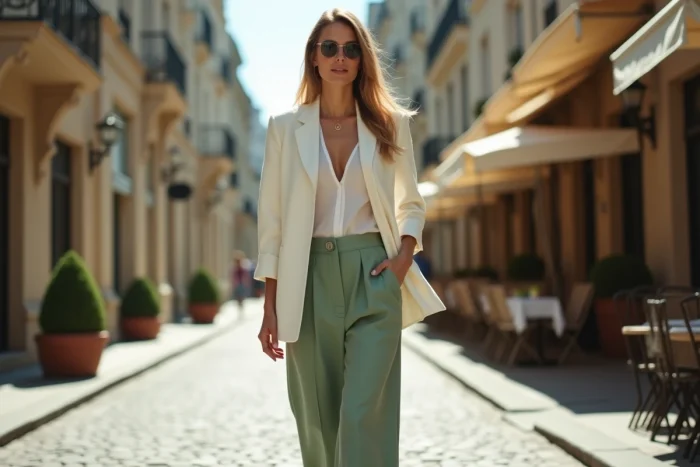
The strict separation between spring-summer and autumn-winter collections is losing ground. According to data published in early 2025 by Lyst, seasonless micro-trends are exploding on TikTok and Instagram. Four-season layering, the “office to aperitivo” concept—these approaches mix lightweight and warm pieces in one look.
Why this choice? Because it meets a concrete need. Mid-season days fluctuate between morning chill and afternoon warmth. A flowy dress worn with a light sweater draped over the shoulders and ankle boots works from April to October.
Three Combinations That Work Between Seasons
- A midi knit skirt paired with a cotton t-shirt and a short jacket – layering creates texture without weighing down the silhouette
- Wide linen trousers worn with a fine turtleneck and loafers – the contrast of materials is enough to give character to the look
- An summer dress under a belted trench with visible socks and closed sandals – this combination extends the lifespan of summer pieces
Maximizing your wardrobe year-round rather than following seasonal codes: this is the common thread of this trend. Each item purchased should be able to serve for at least six months, not three.
Sustainable Colors and Materials: What’s Changing in Women’s Collections
On the palette side, neutral tones remain a staple: beige, ecru, soft gray. They form the visual backbone of a chic, effortless look. Bright colors appear in touches, on an accessory or a unique piece that anchors the outfit.
The most notable change concerns materials. According to the 2025 report from the Global Fashion Agenda, the share of women’s collections highlighting recycled or upcycled materials has been steadily increasing since 2023. Brands like H&M, Zara, and Mango are now promoting “conscious” or “join life” lines in their seasonal lookbooks.

Since 2023, the European Commission’s guidelines on greenwashing require brands to precisely justify the “eco-friendly” or “sustainable” claims on their labels. The result: vague claims are declining in favor of traceable information. A good reflex is to check the exact composition on the label rather than relying on the marketing name of the collection.
Guidelines for Choosing a Fashionable and Responsible Piece
- Read the full composition: a garment labeled “eco” but containing a majority of regular polyester does not hold its promise
- Favor natural or certified materials (organic cotton, linen, recycled wool) for pieces worn directly against the skin
- Check that the brand details the origin and manufacturing process, not just a green logo in the window
Adopting a Fashion Trend Without Transforming Your Style
The classic temptation is to renew your entire wardrobe with each new season. It’s costly and rarely satisfying. A more effective approach: integrate just one trendy piece per season into a stable wardrobe.
For example, if the barrel cut dominates the storefronts in spring, a single barrel jean is enough. Paired with a basic top already in the wardrobe, it modernizes the silhouette without creating a break with the rest of the clothes.
The same logic applies to colors. Butter yellow regularly appears in the current fashion selections. Rather than buying a total yellow look, a scarf or bag in that shade adds the desired touch of novelty.
This principle also protects the budget. By limiting impulsive purchases related to fleeting trends, you focus your spending on pieces that last. A personal style is built through slow accumulation, not complete replacement.
Fashion trends serve as a compass, not a dress code. Keeping a solid foundation of basics, daring to mix seasons, and checking the actual quality of materials: these three habits are enough to stay stylish from January to December, without transforming your wardrobe every three months.